
How Slot Machines Work at Sneket
Understanding how slot machines really work helps US players play with realistic expectations. This guide explains RNGs, independent spins, RTP and the house edge at Sneket, and debunks the common myths. We stay honest: slots are random with a house edge, no slot is ever "due" to pay, machines are never "hot" or "cold", and no strategy or system beats the odds. Knowing how slots truly work protects you from illusions.
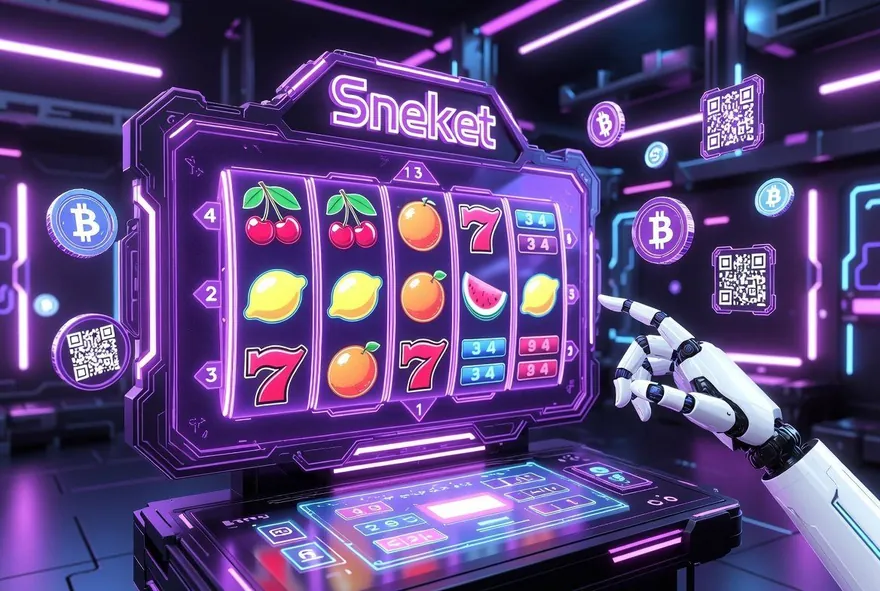
The random number generator
At the heart of every online slot machine is a random number generator (RNG). The RNG produces a random result for each spin, determining where the reels stop and what symbols appear. This result is generated the instant you spin, independently and randomly, so every spin's outcome is a matter of chance, not pattern or timing.
At Sneket, slots from recognized studios use certified RNGs that are independently tested to confirm they produce genuinely random results. This means the outcomes are honest and unmanipulated. Understanding that the RNG governs every spin is the foundation for understanding how slots really work. It tells you that outcomes are random and cannot be predicted or influenced by timing, past results or strategy. The RNG is the engine of the slot, producing a fresh, random result each spin, and its certification ensures those results are genuinely random — the basis of fair, honest slot play at Sneket.
Independent spins
A crucial consequence of the RNG is that every spin is completely independent of every other spin. The RNG has no memory: each spin's result is generated fresh, unaffected by what came before. Whether a slot has just paid a big win or has not paid for a long time, the probabilities on the next spin are exactly the same.
This independence is fundamental to understanding slots. It means past results tell you nothing about future spins, and there is no pattern to track or exploit. Each spin starts from the same odds, governed by chance. Understanding that spins are independent is essential to playing realistically and protects you against fallacies about outcomes being "due". It is the mathematical reason why slots cannot be beaten by tracking results or timing spins. Every spin is a fresh, independent, random event, with the same house edge applying every time, regardless of the slot's recent history. This is the honest reality of how slots work.
Each type, with a slot to try
| Type | Example | Studio | What you will notice |
|---|---|---|---|
| Cluster pays | Sweet Bonanza | Pragmatic Play | No paylines at all — symbols pay wherever they land in groups. |
| Cluster pays, high variance | Gates of Olympus | Pragmatic Play | Same idea, but multipliers drop into the grid and stack. |
| Collect-mechanic video slot | Big Bass Bonanza | Pragmatic Play | A single symbol sweeps up cash values during free spins. |
| Mobile-first cluster slot | Treasures of Aztec | PG Soft | Portrait layout and touch controls built for a phone first. |
| Classic reel slot | Burning Coins 20 | Endorphina | Twenty fixed lines, no bonus rounds, results read instantly. |
All of these run in demo mode without registration — the cheapest way to see a mechanic work rather than read about it.
RTP and the house edge
RTP, or return to player, expresses the house edge of a slot. It indicates the theoretical percentage a slot returns to players over a very long period, with the remainder being the house edge — the casino's built-in advantage. For example, a slot with 96% RTP has a 4% house edge over the long term, across all players collectively.
It is essential to interpret RTP correctly. It concerns very long periods and all players, not your individual session, during which results vary widely, including losses. A high RTP is more favorable long-term but guarantees no win for you. The house edge, expressed through the RTP, ensures the casino profits over time, which is why players are more likely to lose than win in the long run. Understanding RTP and the house edge is essential to realistic slot play. The house edge is built into every slot, whatever its RTP, meaning no slot pays in a way that overcomes the casino's mathematical advantage.
No slot is "due"
A common and false belief is that a slot that has not paid for a while is "due" for a win. This is the gambler's fallacy, and it is important to debunk it honestly. Because each spin is independent and random, a slot is never "due" to pay — the probability of winning on the next spin is the same regardless of how long it has been since the last win.
The RNG has no memory and no obligation to "catch up". A slot that has gone many spins without a significant win is exactly as likely to pay on the next spin as one that just paid, no more and no less. Believing a slot is "due" can lead to chasing losses, betting more in the false expectation of an imminent win — one of the most dangerous behaviors in gambling. Understanding that no slot is ever "due" is essential to playing realistically. It protects you from a costly illusion and keeps your expectations grounded in the reality of independent, random spins.
No "hot" or "cold" machines
Related to the "due" fallacy is the false belief that slots can be "hot" (on a winning streak and likely to keep paying) or "cold" (unlikely to pay). It is important to understand, honestly, that this is also false. Because spins are independent and random, a slot's recent results do not indicate its future results in any way.
A slot that has paid several wins recently is not "hot" and no more likely to keep paying, and a slot that has not paid is not "cold" and no less likely to pay next. Each spin is a fresh, independent event with the same odds. The idea of hot and cold machines is an illusion created by the human tendency to see patterns in randomness. Understanding that no slot is "hot" or "cold" is essential to realistic play. It prevents you from making decisions based on imagined streaks or patterns, and keeps your expectations grounded in the reality that each spin is independent and random, unaffected by the slot's recent history.
Betting systems don't work
Betting systems are often promoted as ways to win at slots, but honestly, no betting system can overcome the house edge. Because each spin is independent and carries the house edge, systems that vary your bet size — like increasing bets after losses — cannot change the underlying odds or guarantee a profit over time.
Systems like the Martingale, which involves doubling your bet after each loss, are particularly risky: a losing streak requires ever-larger bets, which can quickly exhaust your budget or hit bet limits, leading to large losses. Betting systems may change the short-term pattern of wins and losses, but they cannot beat the house edge, which is built into every spin. Understanding that betting systems do not work is essential to realistic slot play. Rather than trusting systems that cannot deliver and can cause significant losses, manage your bankroll sensibly and treat slots as entertainment with a genuine risk of loss.
Play slots with realistic expectations on the official site.
Visit the official site →Fairness and certification
Understanding fairness completes the picture of how slots work. Slots from recognized studios at Sneket use certified RNGs, independently tested to confirm they produce genuinely random results. Many titles are also provably fair, letting you verify individual outcomes yourself using cryptographic methods. This ensures the slots are honest and unmanipulated.
It is crucial to understand that fairness means honest randomness, not a win. A certified, provably-fair slot produces genuinely random results, but those results are governed by the house edge, so you are still more likely to lose than win over time. Fairness guarantees the game is honest, not that it favors you. Understanding fairness and certification gives confidence in the integrity of Sneket's slots, while keeping expectations realistic. The slots are fair — genuinely random and verifiable — but fairness and the house edge coexist, which is why no slot guarantees a win, however fair and certified it is. This is the honest reality of fair slot play.
Playing realistically
Understanding how slots really work leads to playing realistically. Knowing that spins are random and independent, that no slot is "due" or "hot", that the house edge is always present, and that no system beats the odds, you can play with honest expectations. Slots are a form of entertainment governed by chance, with a genuine risk of loss and no guaranteed win.
Playing realistically means treating slots as entertainment, not a way to make money, and never chasing losses in the false belief that a win is imminent. It means setting a budget you can afford to lose, choosing slots for enjoyment, and accepting that outcomes are random. This realistic approach protects you from the illusions and costly mistakes that arise from misunderstanding how slots work. For US players, understanding the reality of slots — random, house-edged, unbeatable by system — is the foundation of a healthy, controlled approach that keeps slot play enjoyable and within safe limits.
Responsible gambling
Responsible gambling flows naturally from understanding how slots work. Treat slots as entertainment, not a way to make money: they are random with a house edge, no slot is ever "due", and no system beats the odds. Set a fixed budget and time limit, and only gamble with money you can afford to lose. Never chase losses in the false belief a win is coming.
Because Sneket operates offshore, outside US self-exclusion programs, conscious play is especially important. Play slots with realistic expectations, and do not increase bets to recover losses. If gambling becomes a problem for you, free and confidential support is available: call the National Problem Gambling Helpline at 1-800-GAMBLER, or contact Gamblers Anonymous or Gambling Therapy. Understanding how slots really work, and playing responsibly within a budget you can afford, together form the basis of a healthy, controlled experience at Sneket.
Frequently asked questions
How do online slot machines work?
Each spin is produced by a random number generator, giving an independent, random result unaffected by previous spins. The house edge is built into the game via the RTP.
Is a slot ever "due" to pay?
No. That is the gambler's fallacy. Each spin is independent, so a slot that has not paid is no more likely to pay next. Machines are never "hot" or "cold".
Can a strategy beat slots?
No. No strategy or betting system overcomes the house edge on random, independent spins. Systems like Martingale cannot change the odds.
Online slot machines at Sneket work via a random number generator that gives each spin an independent, random result. The house edge is built in through the RTP, so over time you are more likely to lose than win. No slot is ever "due" to pay (the gambler's fallacy), machines are never "hot" or "cold", and no betting system beats the house edge. Slots from recognized studios are certified and often provably fair — honest, but not a guaranteed win. Play for entertainment within a budget you can afford, and if gambling is a problem, call 1-800-GAMBLER.