
Pokie Machines at Sneket
Understanding how pokie machines work helps you play with realistic expectations at Sneket. This guide explains reels, paylines, the random number generator, RTP and volatility, honestly and clearly. Our key message: every pokie is random with a house edge, each spin is independent, no machine is ever "due" for a win, and no pokie pays better in a predictable way. Knowledge here is about understanding, not beating the odds.
The basics
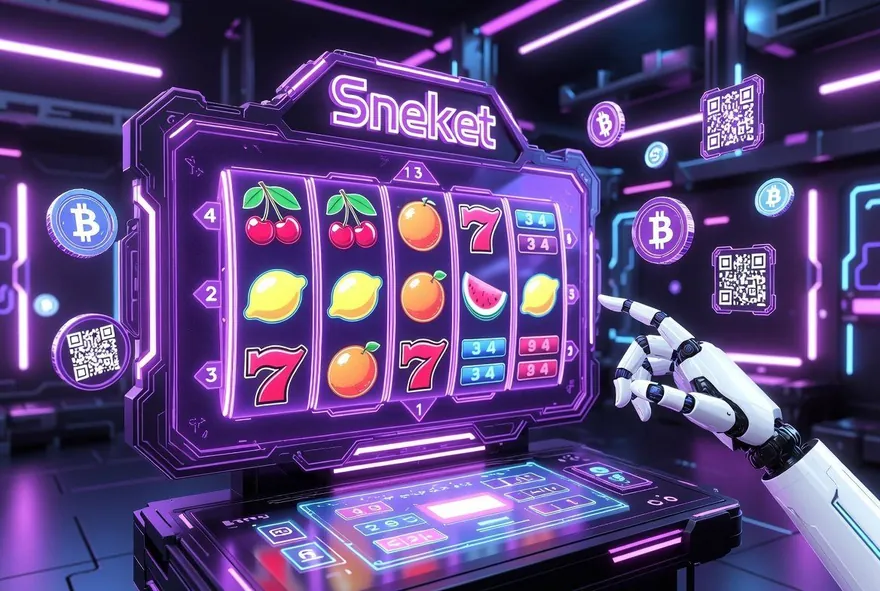
A pokie machine is a game where symbols land on spinning reels, and matching combinations along paylines produce payouts according to the paytable. At Sneket, pokies range from classic three-reel machines to modern video pokies with many reels and features. The basic goal is simple: spin and hope for winning combinations, though the outcome is entirely determined by chance.
Understanding the basics helps you know what is happening when you play. The core mechanism is that each spin's result is generated randomly, independently of any pattern or previous result. There is no skill element that influences the outcome once you spin. In this guide we explain the components — reels, paylines, the RNG — and the concepts of RTP and volatility, so you can play with a clear understanding. The essential point throughout is that pokies are games of chance with a house edge, and no win is guaranteed.
Reels and paylines
Reels are the vertical columns of symbols that spin when you play a pokie. Classic pokies typically have three reels, while modern video pokies often have five or more. When the reels stop, the symbols that land determine whether you have a winning combination, based on the game's rules.
Paylines are the patterns along which matching symbols must land to produce a win. Some pokies have a single payline, others have many, and some use "ways to win" systems with thousands of possible combinations. The paytable shows which combinations pay and how much. Understanding reels and paylines helps you follow the game and read the paytable. Remember, though, that however many reels or paylines a pokie has, the result of each spin is random, and more paylines mean more combinations, not better odds in a predictable sense. The house edge applies regardless.
The random number generator
The random number generator (RNG) is the heart of every pokie. It produces a random, independent result for each spin, determining where the symbols land. Games from recognised studios at Sneket use certified RNGs, independently tested to confirm that results are genuinely random and not manipulated.
The RNG ensures that each spin is a fresh, independent event, unaffected by previous spins or any pattern. This is the technical foundation of fair play, guaranteeing that outcomes are the product of chance. It is essential to understand that this randomness means no spin's outcome can be predicted or influenced, and that fair randomness does not mean a win — the RNG guarantees an honest draw, not an outcome in your favour. The certified RNG is a reassuring guarantee of fairness, working alongside the house edge that is built into every pokie.
Independent spins
A crucial concept to understand is that each spin is completely independent of every other spin. Because the RNG generates a fresh random result each time, the outcome of one spin has no influence whatsoever on the next. The machine has no memory of previous results, and every spin starts from the same probabilities.
This independence is fundamental and has important implications. It means that past results — a long losing streak or a recent big win — tell you nothing about what will happen next. There is no pattern to exploit and no way to predict the next outcome. Understanding that spins are independent is essential to playing pokies realistically and protects you against fallacies about machines being "hot", "cold" or "due". Each spin is a fresh, independent event governed by chance, with the same house edge applying every time, regardless of what came before.
Each type, with a pokie to try
| Type | Example | Studio | What you will notice |
|---|---|---|---|
| Cluster pays | Sweet Bonanza | Pragmatic Play | No paylines at all — symbols pay wherever they land in groups. |
| Cluster pays, high variance | Gates of Olympus | Pragmatic Play | Same idea, but multipliers drop into the grid and stack. |
| Collect-mechanic video pokie | Big Bass Bonanza | Pragmatic Play | A single symbol sweeps up cash values during free spins. |
| Mobile-first cluster pokie | Treasures of Aztec | PG Soft | Portrait layout and touch controls designed for a phone first. |
| Classic reel pokie | Burning Coins 20 | Endorphina | Twenty fixed lines, no bonus rounds, results read instantly. |
Every one runs in demo mode without registration, which is the cheapest way to see a mechanic work rather than read about it.
RTP
RTP, or return to player, is the theoretical percentage a pokie returns over a very long period. A higher RTP is generally considered more favourable to the player long-term, and many players use it as a criterion when choosing pokies. It is a useful objective figure for comparison.
The key to RTP is interpreting it correctly. It applies to very long periods — millions of spins — not to your individual session, during which results can vary enormously, including significant losses. A high RTP therefore guarantees nothing for your actual play. Use RTP as one factor for comparing pokies, while understanding it is a long-term statistical property, not a promise of returns. Keeping RTP in realistic perspective prevents false expectations: it describes a theoretical long-term average across all players, not what will happen in your session, which remains random and governed by the house edge.
Volatility
Volatility describes a pokie's risk profile — how it tends to pay out. High-volatility pokies pay rarely but potentially larger amounts, while low-volatility pokies pay more often but in smaller amounts. Volatility shapes the experience of playing and how your bankroll is used over a session.
Choosing volatility to match your budget and preferences is useful. Low-volatility pokies suit limited budgets and longer sessions with more frequent small wins, while high-volatility pokies suit players seeking the thrill of rare larger wins who have a budget to weather dry spells. Volatility is a helpful criterion for matching a pokie to your situation, but it does not change the fundamentals: all pokies are random with a house edge, and volatility affects the pattern of the experience, not your overall odds. Understanding volatility helps you choose games that suit how you like to play.
Try different pokies on the official site.
Visit the official site →The house edge
The house edge is the built-in statistical advantage that ensures a casino profits over the long term, regardless of how fair the games are. In pokies, it is expressed through the paytable and the RTP: an RTP below 100% means that, over a very long period, the game returns less than it takes in. This is how pokies work economically.
It is essential to understand that the house edge coexists with perfect fairness: a pokie can be entirely fair, with certified random results, while still having a house edge. These are not contradictory. The house edge explains why no pokie guarantees a win and why, statistically, the casino is favoured over the long term. No strategy or system can overcome it, because the outcomes are random. Playing with a clear awareness of the house edge is essential for realistic expectations and a healthy approach to pokies.
Common myths
Several myths surround pokie machines, which we debunk honestly. The most common is the gambler's fallacy: the belief that a machine that has not paid for a while is "due" for a win. This is false, because each spin is independent, and a past streak has no bearing on the next spin's probabilities. A machine is never "due".
Another myth is that a machine can be "hot" or "cold" — that it goes through phases of paying more or less. Again, this is false, as each spin is independent and governed by the same probabilities. A related myth is that betting systems can guarantee a win on pokies; no system can overcome the house edge on random outcomes. Understanding that these beliefs are false is essential to playing pokies realistically. It protects you from decisions based on illusions and keeps your expectations grounded in the reality of independent, random spins.
Responsible gambling
Responsible gambling is essential when playing pokies. Treat them as entertainment, not a way to make money: no pokie pays better in a predictable way, and all are random with a house edge. Do not fall for myths about machines being "due" or "hot". Set a fixed budget and time limit, and only gamble with money you can afford to lose.
Because Sneket operates outside national self-exclusion schemes, conscious play is especially important. Understand how pokies work, play for enjoyment, and do not chase losses. If gambling becomes a problem for you, organisations like Gambling Help Online, Lifeline (13 11 14), Gamblers Anonymous and Gambling Therapy offer free, confidential support. Understanding pokies realistically, combined with responsible play, is the basis of a healthy, controlled entertainment experience.
Frequently asked questions
How do pokie machines work?
Each spin uses a random number generator to produce an independent result. Symbols land on reels along paylines; matching combinations pay according to the paytable.
Are pokie results truly random?
Yes. Games from recognised studios use certified, independently tested RNGs, so each spin is random and independent of previous spins.
Can a pokie be "due" for a win?
No. That is the gambler's fallacy. Each spin is independent; a machine that has not paid for a while is no more likely to pay next.
Do pokies guarantee a win?
No. All pokies are random with a house edge. RTP is a long-term average, not a promise for your session.
Pokie machines at Sneket work through a certified random number generator that produces an independent result for each spin, with symbols landing on reels along paylines. Remember the essentials: every spin is independent, no machine is ever "due" for a win, RTP is a long-term average not a promise, and the house edge always applies. No pokie pays better in a predictable way. Understand the mechanics, keep your expectations realistic, and always play responsibly.