
Blackjack at Sneket Casino
Blackjack is the thinking player’s casino game — part luck, part skill, and one of the few where your decisions genuinely move the odds. At Sneket you can play everything from quick digital tables to immersive live-dealer rooms. This guide covers the rules, the basic strategy that shrinks the house edge, the main variants, and how to play smart.
The rules
Blackjack’s appeal starts with how simple its goal is: beat the dealer by finishing with a hand total closer to 21 than theirs, without exceeding 21. Number cards count at face value, face cards (jack, queen, king) count as 10, and an ace counts as either 1 or 11 — whichever helps your hand more, which is what makes aces so powerful. A “blackjack” is an ace plus any ten-value card on your first two cards, the strongest hand in the game, and it usually pays more than an ordinary win.
You are only ever playing against the dealer, not the other players at the table, which keeps things focused. If your total exceeds 21 you “bust” and lose immediately; if the dealer busts, everyone still standing wins. When neither busts, the higher total wins, and equal totals “push” (a tie, with your stake returned). Those few rules are the entire foundation — everything else is about the decisions you make with your hand.
How a hand plays out
Each hand follows a clear rhythm. You place your bet, then you and the dealer each receive two cards — yours face up, one of the dealer’s hidden. Now you choose how to play your hand from a small set of actions: hit to take another card, stand to keep your total, double down to double your bet in exchange for exactly one more card, or split a pair into two separate hands. Once you finish, the dealer reveals their hidden card and draws according to fixed rules, typically hitting until reaching at least 17.
Because the dealer’s actions are fixed while yours are free, all of blackjack’s skill lives in those decisions. A beginner playing on instinct leaves value on the table; a player who knows the correct action for each situation plays close to the game’s mathematical best. That gap between instinct and optimal play is exactly what the next section closes.
Basic strategy
Basic strategy is the mathematically proven best action for every combination of your hand and the dealer’s visible card. It was worked out by running the odds of every scenario, and following it consistently can reduce the house edge on standard rules to well under 1% — making blackjack one of the best-value games in any casino. This is not card counting or any grey-area technique; it is simply playing each hand the way the maths says gives you the best expected result. Strategy charts that lay this out are freely available, and many players keep one open while they play until it becomes second nature.
A few principles capture much of the value even before you memorise a full chart: always stand on a hard 17 or higher, always split aces and eights, never split tens, and hit a low total against a strong dealer upcard. Doubling down on a total of 11, and on 10 against a weak dealer card, captures more value when the odds favour you. None of this guarantees a win on any single hand — variance is real — but over time it is the difference between playing blackjack well and simply hoping.
Side bets and insurance
Blackjack tables often offer side bets — wagers on things like your first two cards forming a pair, or the dealer busting. They add variety and the occasional big payout, but nearly all carry a noticeably higher house edge than the main game, so they are best treated as occasional fun rather than a core strategy. The most common decision point is insurance, offered when the dealer shows an ace: it is a side bet that the dealer has blackjack. Despite its reassuring name, basic strategy advises declining insurance in almost all situations, because its odds favour the house. Knowing to wave it away is one of the easiest edges a new player can pick up.
Play the game where skill counts
Try blackjack at Sneket, from quick tables to live dealers.
Popular variants
Part of blackjack’s longevity is the number of variants that tweak the classic formula, and the library at Sneket spans the popular ones. Classic blackjack sticks to the standard rules most players know. Variants differ in details such as how many decks are used, whether the dealer stands or hits on a “soft 17,” the payout for a blackjack, and which doubling and splitting options are allowed — and each of these small rule changes nudges the house edge up or down. Live-dealer versions bring the real-table experience, while speed and multi-hand formats let you play faster or across several hands at once.
The practical takeaway is to glance at a table’s rules before you sit down, because the friendliest variants are simply those with the most player-favourable rule set. A game that pays the full traditional amount for a blackjack and lets the dealer stand on soft 17, for instance, is better value than one that trims those rules. Demo versions let you get comfortable with a variant’s specific rules before you play it for real.
Live blackjack
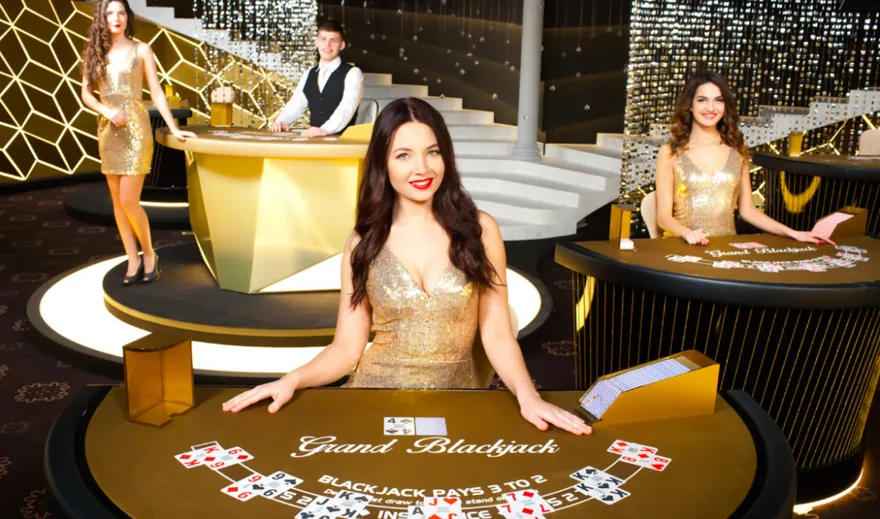
Live-dealer blackjack is where online play feels closest to a real casino floor. A professional host deals physical cards in real time from a studio, streamed to your screen, and you make your decisions through the interface while the action unfolds live. It blends the authenticity many players miss online — a real dealer, real cards, real pace — with the convenience of playing from anywhere. The same basic strategy applies exactly as it does on digital tables, so everything you learn carries straight over. If regular online blackjack has ever felt a little sterile, the live tables are well worth trying.
Bankroll and smart-play tips
Even the best-value casino game deserves a sensible approach to money. Set a session budget before you sit down and choose a bet size that lets your bankroll absorb the natural swings — a common guideline is keeping each bet a small fraction of your total so a cold streak cannot end things quickly. Use basic strategy on every hand, skip insurance, and treat side bets as occasional entertainment rather than a plan. Take breaks, never chase losses, and lean on the deposit and session tools covered on our responsible gambling page. Played this way, blackjack offers some of the best odds and most engaging decisions in the whole casino.
Why blackjack endures
Of all the games on a casino floor, blackjack has one of the most devoted followings, and the reason is the unusual blend it offers. Slots are pure chance dressed in spectacle; blackjack invites you to participate in the outcome. Every hand poses a genuine question — hit or stand, split or not, double or hold — and there is a correct answer grounded in probability. That combination of a simple objective, fast rounds, and real decisions gives blackjack a texture that keeps players coming back long after a novelty slot has lost its shine. It rewards attention and improvement in a way few casino games do.
It also happens to offer some of the best odds in the house to a player who takes it seriously. With correct basic strategy the house edge is razor-thin compared with most games, which means your entertainment budget tends to last longer at a blackjack table than at a high-edge alternative. None of this makes blackjack a way to earn money — the edge still favours the house, and variance is very real over any single session — but it does make it one of the most player-friendly and mentally engaging ways to spend time in a casino, which is exactly why it has endured for generations and translated so well to the online and live-dealer eras.
Common blackjack mistakes
A handful of avoidable mistakes cost new players more than bad luck ever does. The most frequent is deviating from basic strategy on a hunch — standing on a hand the maths says to hit, or refusing to split aces because it means putting more money down. These instinctive plays feel safer in the moment but steadily erode your results. A close second is taking insurance whenever it is offered; it feels prudent but is a losing bet in almost every case. Both mistakes come from trusting feelings over the proven odds, and both disappear the moment you commit to playing each hand the recommended way.
The other cluster of errors is about money rather than cards: betting too large for your bankroll, chasing losses by raising stakes to “win it back,” and playing on when you are tired or frustrated. None of these have anything to do with the game’s maths and everything to do with discipline, which is why setting a budget and a bet size in advance matters so much. Play the correct strategy, decline insurance, size your bets sensibly and walk away when you planned to, and you will have sidestepped virtually every way players give back value at the blackjack table.
Blackjack FAQ
What is the goal of blackjack?
Beat the dealer by getting a hand total closer to 21 without going over. Cards count at face value, face cards are 10, and an ace is 1 or 11.
Does strategy really lower the house edge?
Yes. Following basic strategy — the mathematically best action for every hand — can reduce the house edge to well under 1% on standard rules, making blackjack one of the best-value casino games.
Can I play live blackjack at Sneket?
Yes. Live-dealer blackjack streams a real host and real cards in real time, combining an authentic table feel with online convenience.
Should I take insurance?
Generally no. Insurance is a side bet with a house edge that basic strategy advises skipping in almost all situations.
Blackjack rewards players who learn it: master the simple rules, follow basic strategy, decline insurance and manage your bankroll, and you will be playing one of the best-value games at Sneket. Try a demo table first, then take your skills to the live dealers. *House edge under 1% assumes standard rules and correct basic strategy.